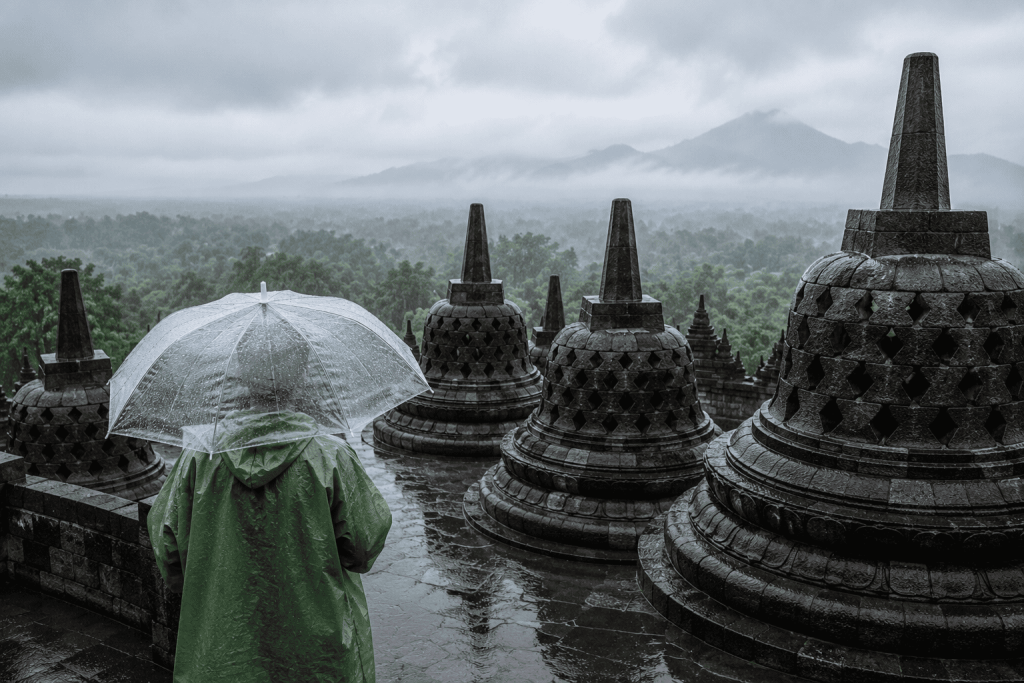

Visiting Borobudur during the wetter months can still create a memorable experience. This Borobudur Rainy Season Guide explains what travelers should expect from the weather, clothing, photography, and daily planning. With a flexible itinerary, rain does not need to ruin your temple visit.
When Is the Rainy Season at Borobudur?
Borobudur generally experiences wetter conditions from around November through March. January and February often bring humid and rainy weather. March usually marks a transition toward drier conditions.
Rain does not always continue throughout the entire day. Conditions can change quickly, so travelers should check the local forecast before leaving their hotel.
The wetter months also bring advantages. Green rice fields and lush vegetation surround the temple. Mist and clouds can create dramatic views across the nearby hills.
Is Borobudur Worth Visiting During Rainy Season?
Yes, especially if you can keep your schedule flexible. Borobudur remains impressive during cloudy or misty weather. Rain can even create a quieter and more atmospheric setting.
However, heavy showers can reduce visibility and make outdoor walking less comfortable. Humidity may also make climbing the temple structure more tiring.
Avoid planning several attractions with tight timing. Leave extra space between activities so you can adjust your itinerary if heavy rain arrives.
For a broader seasonal comparison, read our best time to visit Borobudur guide. It covers dry-season conditions, crowds, sunrise experiences, and the best visiting times throughout the year.
What Should You Wear?
Choose lightweight and breathable clothing. The weather may feel humid even when clouds cover the sky.
Bring a compact raincoat or lightweight waterproof jacket. An umbrella can also help around the temple grounds. Keep electronics and important documents inside a waterproof pouch.
Comfortable footwear matters during wet weather. Stone paths and outdoor areas may feel slippery after rainfall. Walk carefully and avoid rushing between locations.
Visitors who climb the temple structure use special Upanat sandals as part of the official structure experience.
When Should You Visit During Rainy Season?
Morning visits often provide more flexibility. An early session leaves enough time to adjust your plans later if the weather changes.
Check the forecast before departure instead of relying only on monthly weather patterns. Local conditions can vary from one day to another.
Photography enthusiasts may enjoy cloudy mornings. Soft light can reduce harsh shadows across the stone reliefs. Mist may also create atmospheric landscape photographs around Borobudur.
However, do not expect a clear sunrise every morning. Clouds can cover the surrounding mountains during wetter periods.
Plan Transportation Carefully
Rain can affect travel time between Yogyakarta and Borobudur. Leave earlier than necessary if the forecast predicts heavy weather.
Private transportation gives you more flexibility during uncertain conditions. Your driver can adjust departure times or help reorganize nearby stops when necessary.
Travelers who want simpler planning can explore private Borobudur tours. A private itinerary can combine transportation, temple arrangements, and additional destinations in one trip.
You can also keep nearby temples or indoor activities as backup options. This approach makes the day easier when the weather changes unexpectedly.
Conclusion
This Borobudur Rainy Season Guide shows that wetter weather does not make Borobudur a poor destination. Rain brings greener scenery, atmospheric clouds, and a different side of Central Java.
Bring suitable clothing, check the forecast, and keep your itinerary flexible. With good preparation, you can still enjoy Borobudur comfortably during the rainy season.